(1) HOW PROZINES ARE COPING WITH SUBMISSIONS PRODUCED BY AI. The Dark, edited by Sean Wallace, is another sff publication being sent a lot of AI-written stories. They’ve adopted a policy in response:
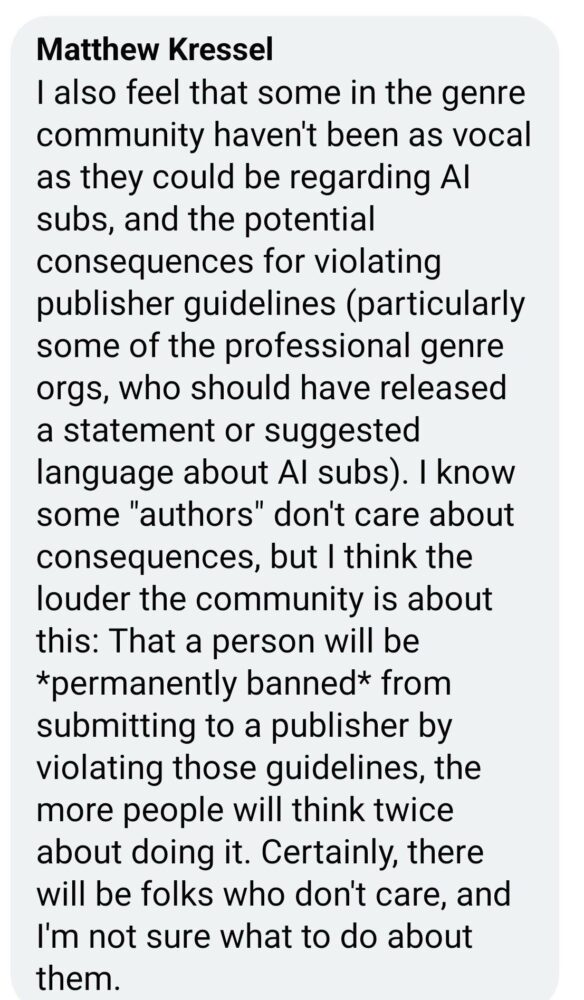
Meanwhile, Matthew Kressel, designer of the Moksha Submissions System used by many sff publications, told Facebook readers today he will “soon be releasing a set of tools for Moksha to allow editors to easily filter AI-generated submissions. Yes, it relies on author affirmation that the work is wholly their own, but to affirm otherwise would be plagiarism. Gotta start somewhere.”
(2) STATEMENTS FROM AUTHORS ORGANIZATIONS. In the UK, the Society of Authors discusses the challenges of “Protecting copyright and creative careers in the face of new technology” in its statement on “Artificial Intelligence” which begins —
Whatever your area of work, whether you are an academic, an illustrator, a poet, a scriptwriter or a translator (to name a few), AI systems are being trained on existing copyright-protected works (input) and these same systems are being used to generate works ‘in the style of’ those existing works (output).
The AI development race is opaque, unfettered and unregulated, and driven primarily by the profit motives of large corporations, despite some likely adverse impacts. The ethical and moral ramifications of these AI systems are complex, and the legal ramifications are not limited to the infringement of copyright’s economic rights, but may include infringement of an author’s moral rights of attribution and integrity and right to object to false attribution; infringement of data protection laws; invasions of privacy; and acts of passing off.
And these aren’t issues for a hypothetical future….
And in the U.S., The Authors Guild discusses the problem in its advocacy article about “Artificial Intelligence”.
Artificial intelligence machines capable of generating literary and artistic works and performing other fantastical tasks that were once “science fiction” are at our doorstep. Today, commercial AI programs can already write articles, compose music, and render images in response to text prompts, and their ability to do these tasks is improving at a rapid clip. A wide assortment of tools to help writers write are commercially available today and show great potential to expedite and improve many writers’ output. At the same time, once AI is writing good books on its own (which is not so far off), it threatens to crowd the market for human authored books.
AI-generated literary and artistic works, even in their most impressive form, are essentially mimicry of human expressive works. AI generative technologies (i.e, AI machines that are used to generate output) are “trained” on mass amounts of pre-existing works (e.g., text, images, recorded music), where the copied works are broken down to their components and rules and their patterns deciphered. The consumer facing AI machines available to date have been trained on works copied by internet crawlers without licenses or permission.
While AI-generated works might look or sound like human-created works, they lack human intelligence and feeling. AI cannot feel, think, or empathize. It lacks the essential human faculties that move the arts forward. Nevertheless, the speed at which AI can create artistic and literary works to compete with human-authored works poses a significant threat to both the economic and cultural value of the latter.
We are confronting serious policy issues about the future of creativity: Do we want humans or AI creating our literature and other arts?…
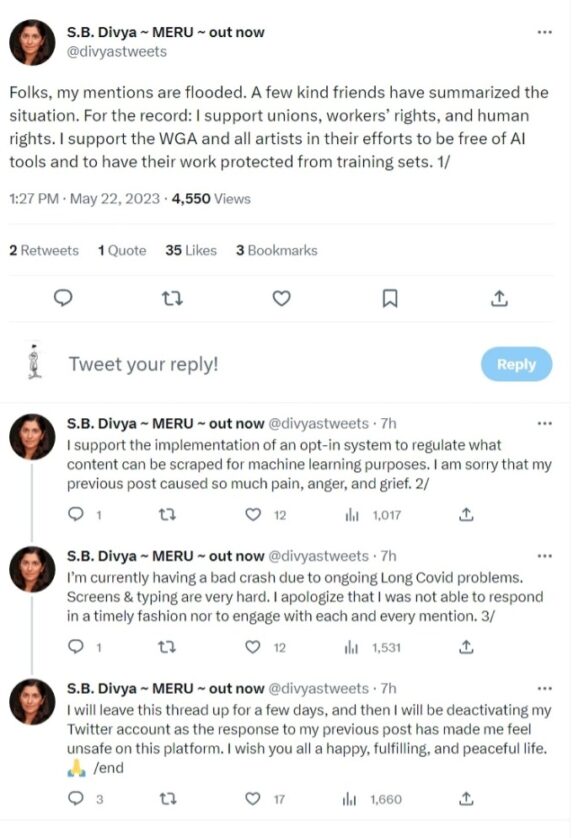
(3) SUDOWRITE ADVOCATE WILL DROP TWITTER. S. B. Divya, whose promotion of Sudowrite’s “Story Engine” on Twitter met with much criticism, announced yesterday that she will be leaving the platform.
(4) MEDICAL UPDATE. “YouTube star Hank Green reveals Hodgkin’s lymphoma diagnosis” reports Deseret News. Green has also written sff novels.
YouTuber and author Hank Green announced that he has been diagnosed with Hodgkin lymphoma in a YouTube video last week.
In the video, Green recounted his diagnosis, saying it all started when “I noticed my lymph nodes were big.” After consulting with his doctor, getting an ultrasound and undergoing a biopsy, Green was given a diagnosis. According to Green, it was “good news, bad news.”
“One, it’s cancer. It’s called lymphoma. It’s cancer of the lymphatic system. And good news, it’s something called Hodgkin’s lymphoma,” Green said. “It’s one of the most treatable cancers. It responds very well to treatment. The goal is cure. The treatment to get there is fairly well-known, if unpleasant.”…
(5) FAIR USE CASE. “After the Warhol Decision, Another Major Copyright Case Looms” – the New York Times briefed readers about a fair use decision and whether it will affect forthcoming litigation.
…Last week, the Supreme Court resolved a major copyright dispute involving a Warhol that many experts thought would have a spillover effect on other cases, including a pair involving Prince that are currently playing themselves out in federal court in New York.
But in the end, the court’s Warhol decision appeared to be fairly narrow, the experts said, as the justices did not so much weigh in on how much of another work an artist can copy, but ruled instead on what sort of use such a work can be put to.
Warhol, who died in 1987, had created a series of silk-screen portraits of the rock star Prince that were based on a photograph of the musician taken by Lynn Goldsmith. One of the silk-screens was licensed by his estate to Condé Nast in 2016 to illustrate the cover of a special issue about the musician’s legacy.
When Goldsmith sued, asserting her copyright had been infringed, the Warhol estate argued that it was entitled to the so-called fair-use defense. The estate’s lawyers suggested that Warhol’s treatment of the image, which was colored, cropped and shaded in certain places, had been “transformative,” a term the courts have adopted to define just how much change the appropriating artist must bring to the underlying work to pass muster.
Many thought the latest Supreme Court decision might more clearly delineate what qualifies a work as transformative. But the justices chose instead to focus on how the Warhol portrait had been used, namely to illustrate an article about the musician. The court found that such a use was not distinct enough from the “purpose and character” of Goldsmith’s photo, which had been licensed to Vanity Fair years earlier to help illustrate an article about [the musician] Prince….
… Brian Sexton, a lawyer for [artist] Richard Prince, said the Supreme Court, in its Warhol decision, “went to great pains” to make clear that its findings were “limited to a single licensing dispute.”
“As Richard Prince makes individual paintings and does not license his works, the holding in Warhol is clearly inapplicable to his New Portraits litigation,” he said….
(6) OCTAVIA BUTLER FELLOWSHIP AWARDED. Dr. Lois Rosson is the winner of the second Octavia E. Butler Fellowship, which will support her work at the Huntington in Pasadena, CA. “Introducing the 2023–24 Huntington Fellows”.

Among the incoming cohort of fellows is Lois Rosson, winner of the Octavia E. Butler Fellowship. She received her Ph.D. from the history department of the University of California, Berkeley, in 2022 and took up a Berggruen Institute Fellowship at USC’s Center for Science, Technology, and Public Life the same year. Rosson is a historian of science, focusing on visual representations of the space environment. Her work has been supported by the Smithsonian’s National Air and Space Museum, Lawrence Livermore National Laboratory, NASA’s Ames Research Center, and The Huntington, where she was awarded a short-term fellowship in 2020.
As the second Butler Fellow at The Huntington, Rosson will develop her first book project, which explores why visual tropes that associated outer space with Western frontier expansion persisted into the late 20th century. At no point in this history, she argues, was the framing of space landscapes as topographies ideologically continuous with American Manifest Destiny an obvious or inevitable outcome. How then, she asks, did this perception become so dominant?
Rosson proposes two conceptual alternatives to depictions of space as a landscape couched in colonialist narrative. The first centers on Afrofuturist representations of outer space as a realm to which inhabitants of Earth can hypothetically flee—as opposed to landscapes characterized by prospective settlement or colonial resource extraction. The second compares representations of Latinx farm workers in midcentury California with visions of the labor-free space colonies developed by NASA at the time.
Rosson plans to spend her time principally working with The Huntington’s Octavia E. Butler Papers. Butler’s literary vision of space as a place of asylum, Rosson writes, is one of the most widely read of the 20th century. In Butler’s novel Parable of the Sower, the protagonist, Lauren Oya Olamina, frustrated with life in dystopian California, compares Mars—“cold, empty, almost airless, dead”—to heaven. In Olamina’s view, the Martian landscape is not an especially inviting one, but it offers the prospect of escaping a planet characterized by degraded human life and violent climate catastrophe. At The Huntington, Rosson will focus on Butler’s ideas about how life in space should be organized as well as her upbringing in Pasadena and proximity to NASA’s Jet Propulsion Laboratory.
Along with representations of space as a realm of noncorporate diaspora, Rosson explores the centrality of agricultural production to the large-scale space station designs that emerged in the 1970s and ’80s. While illustrations of these space stations depicted fully populated colonies set against the pastoral landscapes of fully engineered agricultural systems, the labor required to maintain these environments is never depicted. Rosson plans to compare depictions of agricultural production in space with the idealized versions circulated in 20th-century American print culture, which erased most traces of human labor. She argues that images of California citrus and vegetable farming—like those illustrated on lithographed labels held in The Huntington’s Jay T. Last Collection of Graphic Arts and Social History—function as visual precursors to the inert versions eventually depicted in illustrations of futuristic space stations in the early 1970s, a time when the rights of immigrant farm workers became increasingly visible in the United States.
(7) LOOKING BACK. Sam Reader embarks on a story-by-story commentary on a milestone David G. Hartwell anthology. “Dissecting The Dark Descent: Stephen King’s ‘The Reach,’ and Why Reading Order Matters” at Tor.com.
In 1987, editor David G. Hartwell embarked on a massive undertaking.
Through conversations, panels, and a variety of correspondence, he came to realize the horror genre was at something of a turning point. A lot of horror writers and critics, when they cited their influences and favorite works, tended to favor short stories over longer forms of horror. In fact, a lot of the works that drove horror history appeared to be short stories. After much thought, he compiled what he felt was a definitive work on shorter horror at the crossroads of the genre; The way forward being paved by novels, the previous history built upon the foundation of short stories. It was meant as an all-encompassing paean to dark fiction, to discuss and outline Hartwell’s own thoughts and definitions of the genre.
The result was a huge tome titled The Dark Descent, as much a historical and critical work of horror as it was an attempt to codify and collect the best specimens of short horror stories. It’s award-winning, weighty in both content and size, and looms large in the collections of horror fans old and new.
That was thirty-six years ago. In the years since The Dark Descent landed with an almighty boom upon our bookshelves, horror has in fact changed quite a bit….
(8) GOING, GOING. Jake Thornton reacts to the bad news in “’My Movie Is Being Removed From Disney+ Or Why Streaming Sucks’” at AllYourScreens.com. The Princess will be taken down May 26.
…Now, as you may have already gathered from the title of this post, I have some rather disheartening news to share. The movie that my dear friend Ben and I co-wrote, The Princess, is being removed from popular streaming platforms such as Hulu and Disney+. A decision made in the pursuit of cost-saving measures….
… Here is an article from Variety that provides further insight into this unfortunate development.
To be completely honest, Ben and I are both profoundly saddened by this turn of events. As Ben aptly expressed in his recent tweet, “After 25 years in LA, I finally had a movie that I’m proud of. Now, it could vanish forever…”
And indeed, that is the harsh reality we are faced with. Ben and I have dedicated countless hours to this industry, tirelessly honing our skills as writers. For 15 years, we have toiled together, overcoming numerous obstacles in the pursuit of our dreams. Finally, in 2014, our hard work paid off, and we broke into the industry. Yet, it took an additional seven long years before one of our projects was brought to life. The Princess was that project. Finally! We had achieved something remarkable—an offering for the world to experience. A piece of work that I could proudly share with my future grandchildren. Something to present to those who ever questioned my abilities as a screenwriter, proving that I had indeed left a mark on the world.
However, in an effort to cut costs, Disney has chosen to withdraw The Princess, along with several other films and shows, from their streaming services. This is reminiscent of a similar situation last year when David Zaslav, CEO of Discovery, removed a multitude of shows from HBO Max and even decided against releasing Batgirl to reduce expenses.
Now, both the creative team behind The Princess and ourselves find ourselves among the victims of such decisions….
(9) FEELS MAGICAL. “Vietnam’s Eighth Wonder in ‘A Crack in the Mountain’: Watch First Clip” – Variety tells about the new documentary. The movie is being released in the UK and Ireland on May 26.
…Deep in the jungle of central Vietnam lies an underground kingdom. Hang Son Doong, which translates as ‘mountain river cave’ is the largest cave passage in the world and a place of beauty. Located in the Phong Nha-Ke Bang National Park in Quang Binh Province, the cave entrance was first discovered in 1990 by a local farmer. But it wasn’t explored until 2009 when a British expedition team rigged ropes and descended.
Often described as the eighth wonder of the world, Son Doong has its own lake, jungle and a unique weather system, and remained undisturbed for millions of years. However, in 2014, Son Doong’s future was thrown into doubt when plans were announced to build a cable car into the cave. With many arguing that this would destroy the cave’s delicate eco-system and the local community divided over the benefits this development would bring, the film follows those caught up in the unfolding events….
(10) MEMORY LANE.
2005 – [Compiled by Cat Eldridge.]
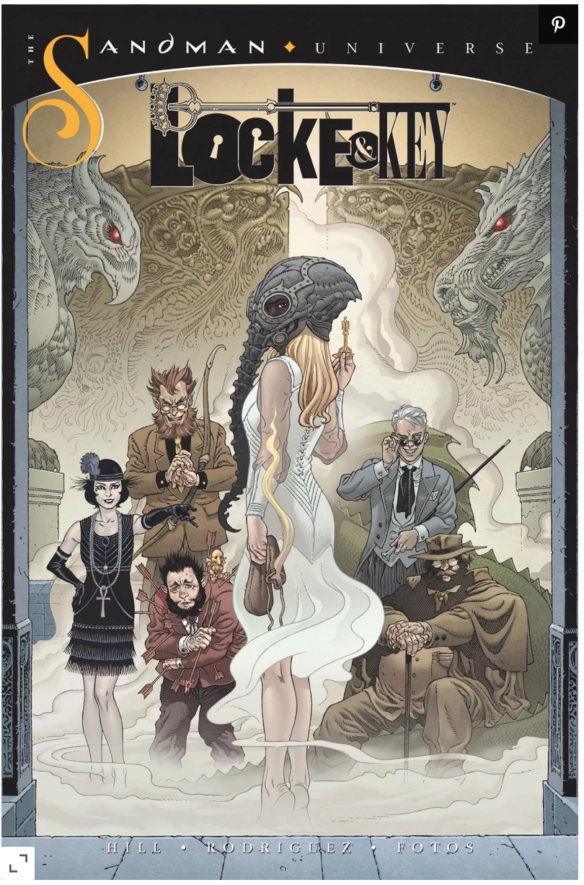
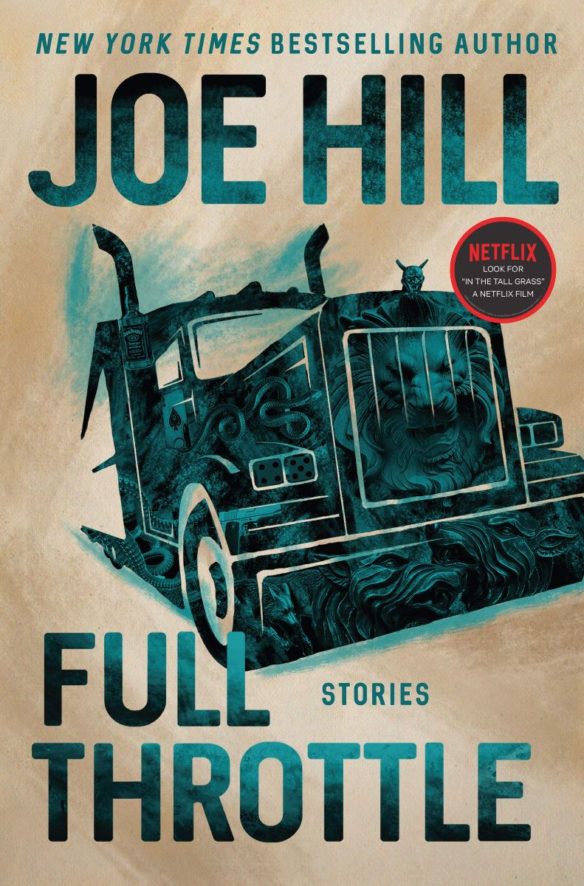
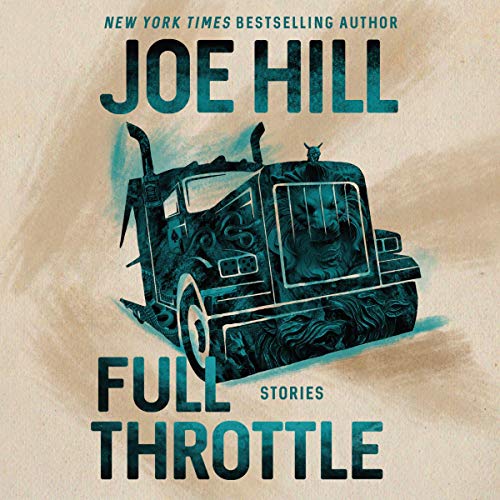
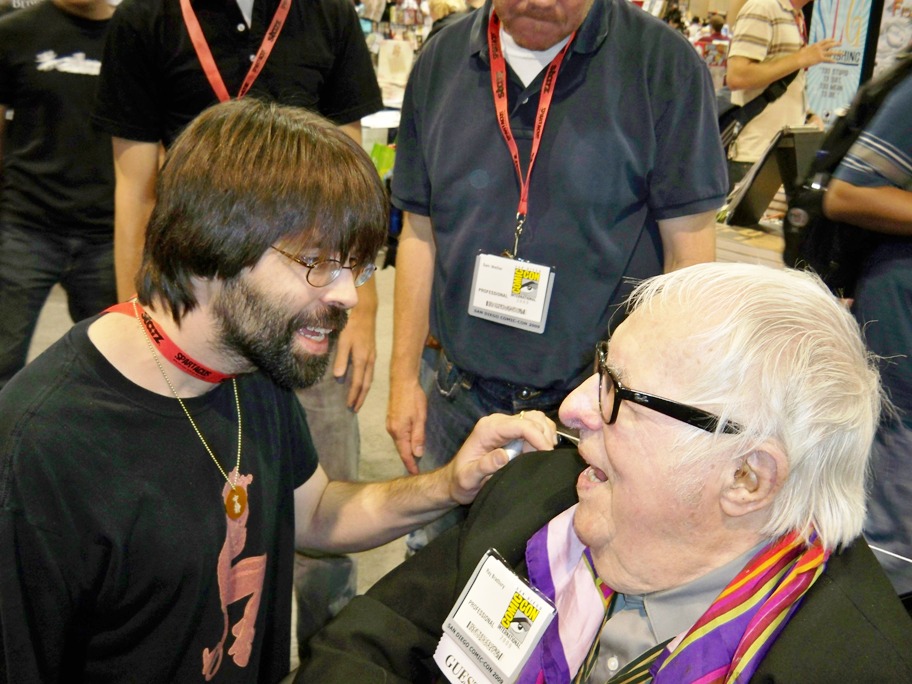
Joe Hill’s the son of Stephen King. I’ve met him several times, and yes he looks like his father. He’s every bit as friendly and charming as his father is in person. Lovely family they are.
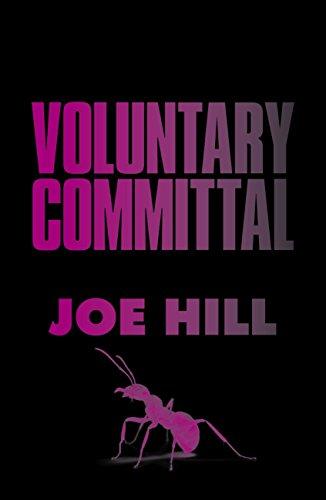
Our Beginning is that of “Voluntary Committal” which was published by Subterranean Press eighteen years ago.
I don’t know who I’m writing this for, can’t say who I expect to read it. Not the police, anyway. I don’t know what happened to my brother, and I can’t tell them where he is. Nothing I could put down here would help them find him.
And anyway, this isn’t really about his disappearance… although it does concern a missing person, and I’d be lying if I said I didn’t think the two things had anything to do with each other. I have never told anyone what I know about Edward Prior, who left school one October day in 1977, and never arrived home for chili and baked potatoes with Mom. For a long time, the first year or two after he vanished, I didn’t want to think about my friend Eddie. I would do anything not to think about him. If I passed some people talking about him in the halls of my high school—I heard he stole his momma’s weed and some money and ran away to fuckin California!—I’d fix my eyes on some point in the distance and pretend I was deaf. And if someone actually approached and asked me straight out what I thought had happened to him—now and then someone would, since we were known compañeros—I’d set my face into a rigid blank and shrug. “I almost think I care sometimes,” I said.
Later, I didn’t think about Eddie out of studiously formed habit. If anything happened by chance to remind me of him—if I saw a boy who looked like him, or read something in the news about a missing teen—I would instantly begin to think of something else, hardly aware I was even doing it.
In the last three weeks, though, ever since my little brother Morris went missing, I find myself thinking about Ed Prior more and more; can’t seem, through any effort of will, to turn thoughts of him aside. The urge to talk to someone about what I know is really almost more than I can bear. But this isn’t a story for the police. Believe me, it wouldn’t do them any good, and it might do myself a fair amount of bad. I can’t tell them where to look for Edward Prior any more than I can tell them where to look for Morris—can’t tell what I don’t know—but if I were to share this story with a detective, I think I might be asked some harsh questions, and some people (Eddie’s mother, for example, still alive and on her third marriage) would be put through a lot of unnecessary emotional strain.
And it’s just possible I could wind up with a one-way ticket to the same place where my brother spent the last two years of his life: the Wellbrook Progressive Mental Health Center. My brother was there voluntarily, but Wellbrook includes a wing just for people who had to be committed. Morris was part of the clinic’s work program, pushed a mop for them four days out of the week, and on Friday mornings he went into the Governor’s Wing, as it’s known, to wash their shit off the walls. And their blood.
Was I just talking about Morris in the past tense? I guess I was. I don’t hope anymore that the phone will ring, and it will be Betty Millhauser from Wellbrook, her voice rushed and winded, telling me they’ve found him in a homeless shelter somewhere, and they’re bringing him back. I don’t think anyone will be calling to tell me they found him floating in the Charles, either. I don’t think anyone will be calling at all, except maybe to say nothing is known. Which could almost be the epitaph on Morris’s grave. And maybe I have to admit that I’m writing this, not to show it to anyone, but because I can’t help myself, and a blank page is the only safe audience for this story I can imagine.
(11) TODAY’S BIRTHDAYS.
[Compiled by Cat Eldridge.]
- Born May 23, 1909 — Robert Thomas Maitland Scott Jr., 1909 – 1945. Son in a father-and-son writing team who created The Spider, a pulp character who was clearly a rip-off of The Shadow. They wrote only the first two Spider novels before it was written by various house authors though it’s disputed if Scott Jt. had an uncredited role because the SF element in the series clearly reflect his tastes. He would die in a motor vehicle while on active duty with Royal Canadian Army Service Corps. (Died 1945.)
- Born May 23, 1921 — James Blish. What was his best work? Cities in Flight? A Case of Conscience? I’d argue it was one of those works. Certainly it wasn’t the Trek novels. And I hadn’t realized that he wrote one series, the Pantropy series, under a pen name, that of Arthur Merlyn. (Died 1975.)
- Born May 23, 1933 — Margaret Aldiss. Wife of Brian Aldiss. She wrote extensively on her husband’s work including The Work of Brian W. Aldiss: An Annotated Bibliography & Guide. He in turn wrote When the Feast is Finished: Reflections on Terminal Illness, a look at her final days. She also co-edited the A is for Brian anthology with Malcolm Edwards and Frank Hatherley. (Died 1997.)
- Born May 23, 1935 — Susan Cooper, 88. Author of the superb Dark is Rising series. Her Scottish castle set YA Boggart series is lighter in tone and is just plain fun. I’d also recommend her Dreams and Wishes: Essays on Writing for Children which is quite excellent. The Grey King, part of The Dark is Risk series, won a Newbery, and she received a Lifetime Achievement Award from the World Fantasy Convention.
- Born May 23, 1942 — Zalman King. OK he’s best known for The Red Shoe Diaries which are decidedly not genre and indeed are soft core erotica but even that isn’t quite true as some of the episodes were definitely genre such as “The Forbidden Zone” set in a future where things are very different, and “Banished” which deals with an Angel now in mortal form all on Earth. I’m betting there’s more fantasy elements but I need to go through sixty episodes to confirm that. Denise Crosby appeared in two episodes of the Red Shoe Dairies playing the different characters, Lynn ‘Mona’ McCabe in “The Psychiatrist” and Officer Lynn ‘Mona’ McCabe in “You Have the Right to Remain Silent”. Zalman himself played Nick in “The Lost Ones” episode on The Land of The Giants and earlier was The Man with The Beard in the Munsters episode of “Far Out Munsters”. His final genre acting gig was on The Man from U.N.C.L.E. as Gregory Haymish in “The Cap and Gown Affair”. (Died 2012.)
- Born May 23, 1967 — Sean Williams, 56. Australian author who has been the recipient of a lot of Ditmar and Aurealis Awards. And I mean a lot. Most of his work has been co-authored with Shane Nix (such as Emergence and Orphans series, Star Wars: New Jedi Order novels) but I’d recommend The Books of the Cataclysm series wrote solely by him as it’s most excellent. He’s deeply stocked at the usual digital suspects.
- Born May 23, 1986 — Ryan Coogler, 37. Co-writer with Joe Robert Cole of Black Panther which he also directed. He directed Black Panther: Wakanda Forever. Producer, Space Jam 2, producer of the Wankanda series on Disney+. Black Panther was a Hugo finalist at Dublin 2019: An Irish Worldcon, the year that Spider-Man: Into the Spider-Verse won.
(12) ‘BLOOM COUNTY’ – A BETTER FAREWELL. When the Bloom County comic originally closed its run in 1989 Mark Roth-Whitworth thought he could improve on the way it ended. “For something different: a Bloom County end”.
A long time ago, a comic strip ended: Bloom County. A lot of us were unhappy, but I also thought that there could have been a better ending… so I wrote one.
Star Date 93350.09 Captain’s Log of the Starchair Enterpoop, Helmsman and now commanding officer Binkley recording.
It seems that our long mission has come to an end. Apparently, we have been successful….
(13) CYBERWARFARE. [Item by Francis Hamit.] This one should interest military SF fans and gamers. “The Cyber Crucible: Eastern Europe, Russia, and the Development of Modern Warfare” at Army University Press.
This is a reprint of Chapter 9 from Perceptions Are Reality: Historical Case Studies of Information Operations in Large-Scale Combat Operations, part of The Large-Scale Combat Operations Series.
…In February 2013, General Valery Gerasimov, Russia’s Chief of the General Staff (comparable to the US Chairman of the Joint Chiefs of Staff), published an article titled “The Value of Science is in the Foresight,” in the weekly Russian trade paper Military-Industrial Kurier. In it, Gerasimov suggested that the “very ‘rules of war’ have changed,” and that in many cases, nonmilitary means have exceeded the power and force of weapons in their ability to effect change on the international stage.2 Gerasimov argues that new technologies have reduced gaps between traditional forces and their command and control, though also noting that “frontal engagements of large formations of forces at the strategic and operational level are gradually becoming a thing of the past.”3 The future, Gerasimov suggests, lies in “contactless actions”—made through cyber or other electronic means—being used as the main means of military or intelligence goals. This belief—that traditional military interactions are giving way to newer and subjectively more effective indirect interactions via computers and electronics—has been dubbed by some as the Gerasimov Doctrine…..
(14) MIGHTY MUSCLES. “The Best Hercules Movies”. Is there such a thing? Fans who read Ranker think so.
Over the years, there have been many memorable movies about Hercules that have captivated audiences worldwide. Some examples include the groundbreaking 1958 Italian film Hercules, starring bodybuilder Steve Reeves; Disney’s beloved animated feature Hercules (1997), which boasts an unforgettable soundtrack; and Dwayne “The Rock” Johnson’s action-packed performance in Hercules (2014). Each film offers its own unique perspective on the life and legend of one of Greece’s most iconic heroes, with stunning visuals, thrilling action sequences, and engaging storytelling.
Now it’s your turn to let us know which Hercules movies stand out as the best among this legendary lineup. We invite you to vote on your favorite films featuring this mighty mythical hero. Together we’ll determine which movies truly capture the essence of Hercules’ strength, wisdom, and enduring popularity across generations. So grab your lion-skin cloak and club – it’s time to dive into the world of Hercules like never before.
Number one on the list is actually a sequel:
Hercules Unchained (1959)
In this timeless sequel, we’re treated to the unstoppable Steve Reeves as he takes on the role of Hercules, flexing his muscles and captivating audiences with his charm. With a gripping storyline that has him breaking free from an evil queen’s clutches, it’s no wonder this film became a hit, making Reeves a household name and cementing his status as a beloved hero in cinematic history.
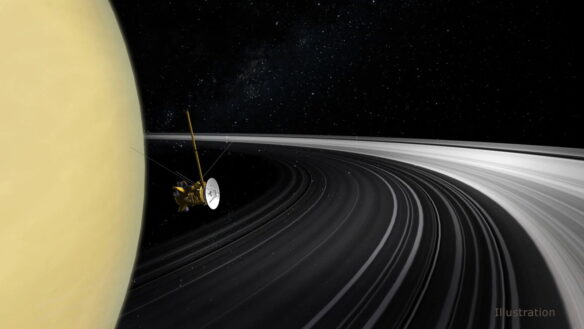
(15) NEW ESTIMATE AS TO HOW OLD ARE SATURN’S RINGS. [Item by SF Concatenation’s Jonathan Cowie.] There are two main, competing hypotheses: (1) They are ancient and either formed with Saturn or during the late veneer, or… (2) They are young and formed since then. Now data has been analysed from the Cosmic Dust Analyzer (CDA) on the Cassini spacecraft, which began orbiting Saturn in July 2004 until end of mission in September 2017. Continuous bombardment by non-icy micro-meteoroids from beyond the Saturnian system is a source non-icy material in Saturn’s rings. Knowing that rate of micro-meteor accumulation in the rings and knowing how much is the non-icy component to the rings, it is possible to estimate the age of the rings. Using CDA data European and US based astronomers estimate that the rings’ age is between around 100 million and 400 million years: hypothesis ‘2’. This estimate chimes in with a previous one using a different method. (See Kempf, S. et al. (2023) “Micrometeoroid infall onto Saturn’s rings constrains their age to no more than a few hundred million years”. Science Advances, vol. 9 (19), eadf8537.)
(16) TIMEY WIMEY. Vice’s article “Black Holes Might Really Be Giant Structures Made of Spacetime, Physicists Propose” seemed a lot easier to understand when I imagined David Tennant reading it to me.
Black holes might really be strange defects in spacetime called topological stars that are generated by hidden cosmic dimensions, reports a new study.
Topological stars are completely hypothetical and only exist as mathematical constructions at this point. However, they have the potential to probe perplexing paradoxes of the cosmos, including the true nature of black holes and the mind-boggling ideas raised by string theory, a framework that attempts to reconcile seemingly contradictory physical laws into a unified theory.
String theory proposes that particles in the universe are actually vibrating strings tethered to many extra dimensions that are imperceptible to us. Scientists at Johns Hopkins University (JHU) have worked for years to envision the objects and phenomena that might exist in such a universe, including topological stars, or topological solitons, which are bubbles of nothing that form in the fabric of spacetime.
Now, the team has used simulations to show that topological solitons would appear “remarkably similar to black holes in apparent size and scattering properties, while being smooth and horizonless,” according to a recent study published in Physical Review D. In other words, the hypothetical objects would look almost exactly like black holes from our perspective, raising the tantalizing possibility that they may actually lurk in our universe.
[Thanks to Mike Kennedy, Andrew Porter, John King Tarpinian, SF Concatenation’s Jonathan Cowie, Jeffrey Smith, Francis Hamit, Chris Barkley, Michael Toman, and Cat Eldridge for some of these stories. Title credit belongs to File 770 contributing editor of the day Charon D.]