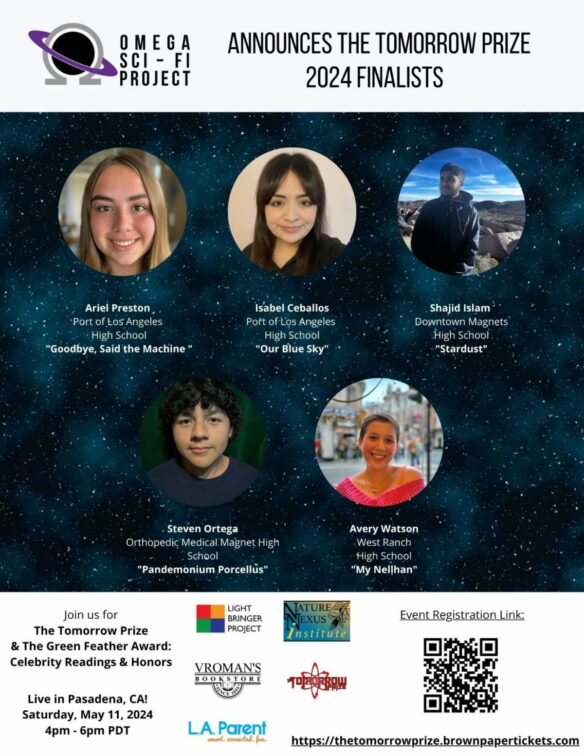
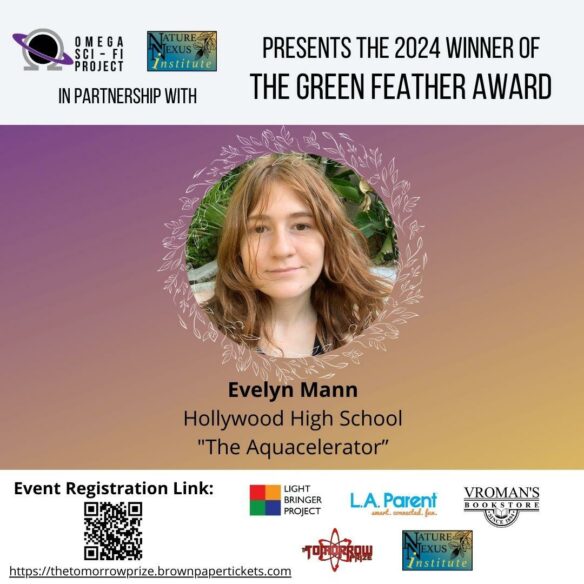
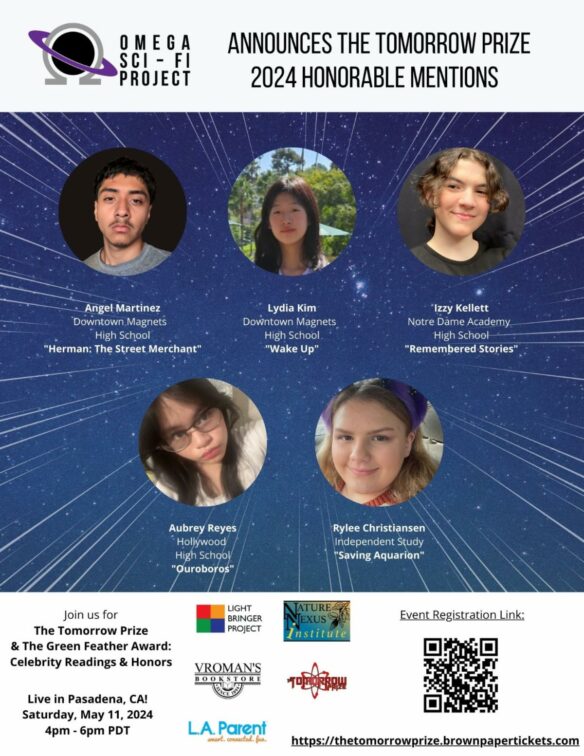
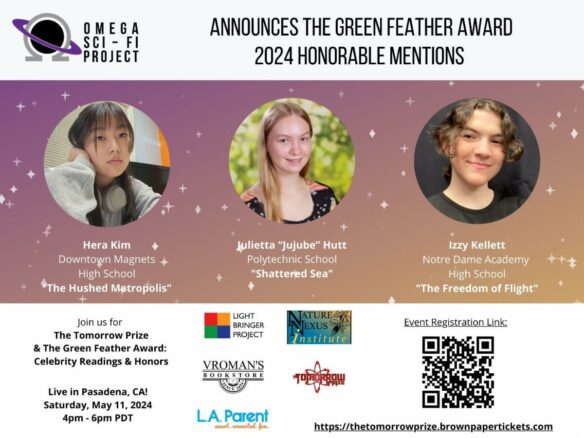
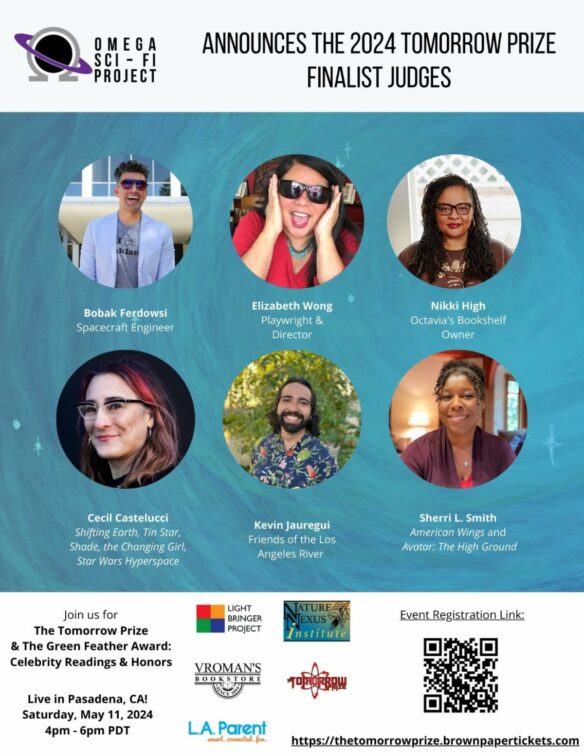
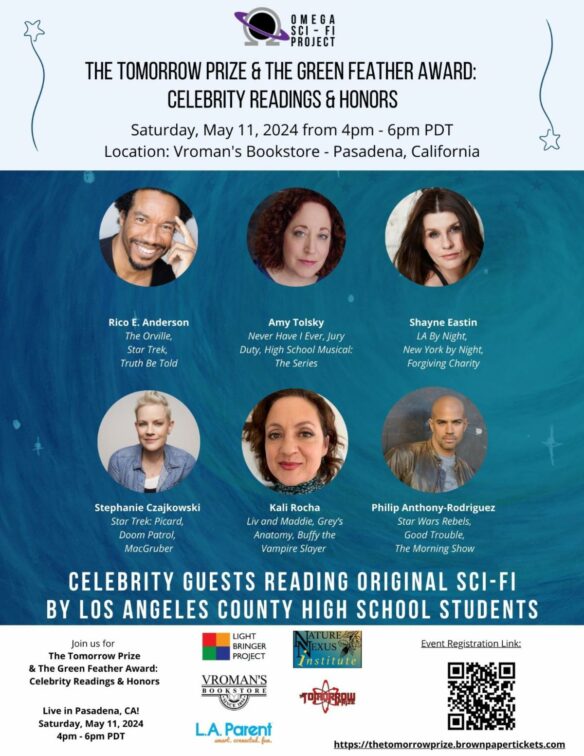
The Tomorrow Prize and The Green Feather Award: Celebrity Readings & Honors will take place May 11. The Omega Sci-Fi Project’s culminating event recognizes outstanding new works of science fiction written by Los Angeles County high school students, as well as this year’s winning ecology-themed sf story.
The 2024 finalists’ stories will be read by celebrity guests on Sunday, May 11 from 4:00-6:00 p.m. Pacific at Vroman’s Bookstore in Pasadena, CA. Register to attend the free event at Brownpapertickets.com.
The winners will receive cash prizes.
First, Second, and Third place Tomorrow Prize winners will receive $250, $150, and $100 USD cash prizes.
The First place Tomorrow Prize winner will be published in L.A. Parent Magazine.
The Green Feather Award is an additional special prize category for an environmentally focused sci-fi story. The winner will receive $250 and online publication by the Nature Nexus Institute.
(1) NOBODY’S HOME. [Item by Steven French.] Extract from a new book in that old chestnut, where is everybody? Smithsonian Magazine asks “Where Is Everybody in Our Universe?”
…There is no doubt that the simplest answer to the questions “Why the Great Silence? Why don’t we hear any SETI signals?” is that we don’t hear signals because no one is sending them. There are a number of other explanations that have been put forward, and we can look at them briefly before taking William of Ockham seriously. Basically, the explanations can be divided into three categories:
1. They really are out there, but they’re not interested in us.
2. They really are out there, but they’re protecting us.
3. They really are out there, and we’re going to get it unless we mend our ways.
An example of the first category would be a race of extraterrestrials living in a Dyson sphere, happy as clams with their star’s energy and supremely uninterested in anyone else. Another possibility would be extraterrestrials on a rogue planet who can’t imagine a planet near a star being inhabitable. An example of the second item in the list is seen in the Star Trek series, where spacefarers obey the Prime Directive, which forbids them from interfering with the development of other life forms. The last category is portrayed in the classic 1950s film The Day the Earth Stood Still, in which an extraterrestrial visitor warns that Earth will be destroyed unless we control our use of atomic weapons:
The authors’ conclusion makes for grim reading: there is no one out there and that’s because evolution produces warlike, aggressive species that use their newly developed scientific expertise to wipe themselves out, a fate that awaits us too.
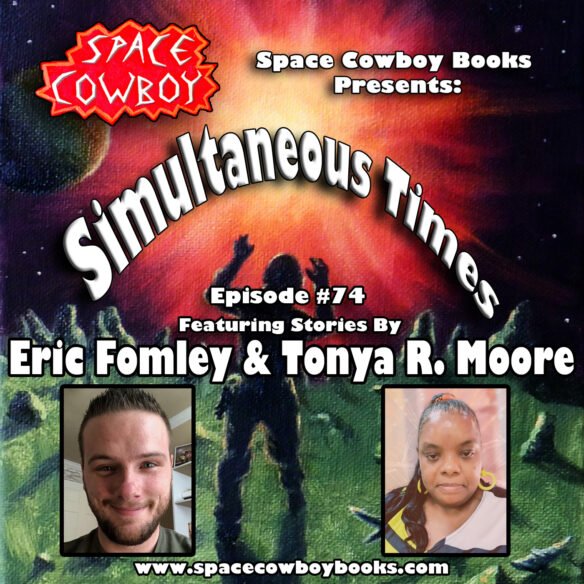
(2) SIMULTANEOUS TIMES. Space Cowboy Books has posted episode 74 of the Simultaneous Times podcast with Eric Fomley & Tonya R. Moore. Stories featured in this episode:
“Control” by Eric Fomley; with music by Phog Masheeen
“Halfway House” by Tonya R. Moore; with music by Patrick Urn Theme music by Dain Luscombe
THERE ARE MANY WHO WANT to believe that a utopia—a perfect society, an ideal world—can exist. Even in America.
Yet, as quickly as leaders eagerly build utopias, they often crumble in a glorious heaping mess. Some fall to sex scandals, others toil in hunger, while many are struck with bad luck. From nudist colonies to bioterrorist cults, we map and explore six of the most disappointing and unfortunate utopias in the United States.
(4) CORA BUHLERT VISITS 1969. Here are links to Cora Buhlert’s recent contributions to Galactic Journey, the blog that keeps track of the latest in science fiction – 55 years ago.
She reviewed The Face in the Frost by John Bellairs and Slaughterhouse Five by Kurt Vonnegut. Cora says, “I lobbied for the Slaughterhouse Five review, considering I actually knew people who survived the bombing of Dresden”: “[March 14, 1969 ] (March 1969 Galactoscope)”.
“Star Wars” creator George Lucas, have expanded his real estate portfolio with the purchase of a $11.2 million 66th-floor penthouse in Streeterville’s800 N Michagan Avenue building from Citadel founder Ken Griffin. They plan to merge this penthouse with their existing 65th-floor condo, bought in 2015 for $18.75 million, to create a 16,000-square-foot duplex penthouse. The total cost for this project is estimated at $33.5 million, setting a new record for Chicago’s most expensive condo. Architect Scott Fortman of Gibbons, Fortman & Associates is overseeing the design, which includes adding two new interior staircases and upgrading electrical and mechanical systems as reported by the Chicago Tribune.
(6) JUBILEE CHO (1998-2024). SFWA today posted “In Memoriam – Jubilee Cho”, honoring the author of the upcoming middle grade fantasy novel Wishing Well, Wishing Well who died on March 6 at the age of 25.
Cho grew up near Disneyland, enamored with stories of fantastical princesses. Yearning to see herself included in such tales, she wrote her own to help give new generations of children something she’d needed to create for herself. Cho planned a long writing career and wanted to use her platform to foster awareness about disability and mental health, and to share the beauty of trans joy with the world.
Author Kwame Mbalia who had reached out as a mentor says, “In the briefest of moments that I was able to interact with Jubilee, her desire to not only write, but to write for young readers about drawing upon their own identity and sharing that with others, was an inspiration. She is an inspiration, and her light is gone too soon, though its glow will live on in the hearts of those who knew her.”
Author E.D.E. Bell said, “Jubilee was a princess who wanted everyone to know that they too can be included in stories, in joy, in femininity, in Pride, in gathering, in any magic they desired. I hope children will find their own spirit in her lovely, hopeful story, and let it lift them to soar.”
(7) TODAY’S BIRTHDAY.
[Written by Paul Weimer.]
Born April 26, 1945 – M. John Harrison, 79.
Paul Weimer wrote this Birthday.
M John Harrison taught me about the joy of inconsistent and contradictory worldbuilding.
For most writers of fantasy, for most works of fantasy, I am always looking for the consistency and the power of the worldbuilding. Inconsistent, and worse, lazy and weak worldbuilding, can catapult me right out of a story or a novel, permanently. This has happened for me as a reader just this month with a brand-new novel.
M. John Harrison
M John Harrison is the exception to that for me. My reading of his work is almost exclusively Viriconium. But it is precisely in Viriconium, Harrison’s carved out territory in the Dying Earth subgenre, that I learned that worldbuilding is not the be all and end all of fantasy writing. The contradictions, the inconsistencies, the lack of cohesion is part of the point of the dying world of Viriconium. Not being able to rely on previous stories and novels in the sequence to understand what is happening in a particular work is something that Harrison relies on, and it is something that I learned to accept, and even expect in the Viriconium stories.
Really, Viriconium’s world building is beside the point, and that is why Harrison writes it in a way that you can’t rely on it. Instead, to use modern parlance, Viriconium is much more all about the “vibes”, and what vibes! Vance and Wolfe may have perfected Dying Earth as a subgenre, but Harrison gives it a feel that few authors have managed to hit ever since. There are few authors I’ve read that have managed to embody the vibe of the subgenre they are writing in as well as M John Harrison has. And with such language and writing. On a sentence by sentence level, Harrison is one of the most talented writers I’ve ever read, of any genre.
A singular talent.
(8) COMICS SECTION.
Free Range has a guest who’s forgotten it’s a talk show.
In about five years’ time, a potentially hazardous asteroid will swing by Earth at an eerily close distance of less than 20,000 miles (32,000 kilometers). During this rare encounter, Apophis will be ten times closer to Earth than the Moon and scientists want to take full advantage of its visit….
…Private space companies like Blue Origin and startup Exploration Labs, or ExLabs, have come up with proposals for missions to rendezvous with Apophis before its anticipated flyby, SpaceNews reported. During a recent workshop at a European Space Agency center in The Netherlands, the companies pitched their mission concepts in an effort to learn more about the asteroid and other space rocks that could pose a potential risk to Earth….
…NASA’s OSIRIS-APEX spacecraft, formerly known as OSIRIS-REx, is already on its way to study Apophis and observe changes the asteroid may endure from its close encounter with Earth. After dropping off samples from the Bennu asteroid in the Utah desert, the spacecraft was repurposed for a new errand, having to carry out close passes to the Sun, as well as three Earth gravity assists, to reach Apophis in five years….
NASA was recognized [April 25] by the 28th Annual Webby Awards with six Webby Awards and eight Webby People’s Voice Awards, the latter of which are awarded by the voting public. The Webbys honors excellence in nine major media types: websites and mobile sites, video, advertising, media and public relations, apps and software, social media, podcasts, games, the metaverse, and virtual and artificial intelligence (AI).
Full List of NASA’s 28th Annual Webby Award Wins
NASA.gov Webby Winner, People’s Voice Winner Websites and Mobile Sites-General Desktop & Mobile Sites | Government & Associations This is the fifth Webby Award and the 12th People’s Voice Award for the agency’s website
NASA: Message in a Bottle NASA Jet Propulsion Laboratory Webby Winner, People’s Voice Winner Advertising, Media & PR-PR Campaigns | Best Community Engagement
[Thanks to Kathy Sullivan, Mike Kennedy, Andrew Porter, Paul Weimer, Bill, John King Tarpinian, Chris Barkley, Cat Eldridge, SF Concatenation’s Jonathan Cowie, Steven French, and Teddy Harvia for some of these stories. Title credit belongs to File 770 contributing editor of the day Andrew (not Werdna).]
The winner of the GUFF 2024 race is Kat Clay of Australia.
GUFF, the Get Up-and-over Fan Fund or the Going Under Fan Fund, depending on which direction it’s running, exists to provide funds to enable well-known fans from Australasia and Europe to visit each other’s national (or other) conventions and get to know each other’s fandoms better.
Alison Scott, European GUFF Administrator, writes:
The GUFF race has concluded and we are delighted to announce that Kat Clay will be the 2024 GUFF delegate and will attend Glasgow 2024: a Worldcon for our Futures. We hope she’ll enjoy the convention and take the opportunity to visit fans across Europe.
There were 81 valid votes cast:
First Preference Votes
Kat Clay
Ian Nichols
No Preference
Australia/NZ
24
18
1
UK/Europe
18
11
4
Other
0
3
2
Total
42
32
7
Redistributing the “no preference” votes where a second preference was stated gave one extra vote to each candidate.
A small number of other votes were received that failed to satisfy one or more of the voting requirements (though, if included, would not have affected the outcome).
VOTERS: Aidan Doyle, Alan Stewart, Alex Isle, Amanda Bridgeman, Andre Czausov, Andrew Hogg, Andrew Porter, Barb de la Hunty, Carey Handfield, Carolina Gomez Lagerlof, Cat Sparks, Catherine Pickersgill, Catherine Sharp, Celia Pearce, Christina Lake, Claire Brialey, Constanze Hofmann, Danny Oz, Dave Langford, Dave Luckett, Dave Sinclair, DC, Donna Maree Hanson, Douglas Spencer, Edie-Brie Hawthorne, Elaine Cuyegkeng, Emily January, Eric Lindsay, España Sheriff, Farah Mendlesohn, Fiona Moore, Geneve Flynn, Gillian Polack, Greg Turkich, Harry Payne, Ian Maughan, Ian Nichols, Irwin Hirsh, James Shields, Jan van’t Ent, Jane Routley, Jean Weber, John Coxon, Joseph Nicholas, Judi Hodgkin (Hemsley), Jukka Halme, Julia Svaganovic, Julian Warner, Julianne Hamilton, Justin Bennett, Leon Moor, Maciej Matuszewski, Marcin Klak, Margaret Dunlop, Mark Loney, Mark Morrison, Mark Plummer, Melissa Ferguson, Michael David (Mike) Kennedy, Mike Scott, Murray Moore, Nathan Phillips, Nicholas Whyte, Omega, Perry Middlemiss, Peter Sullivan, Rich Horton, Robert Hood, Roman Orzanski, Rose Mitchell, Sally Beasley, Sandra Bond, Stephen Dedman, Stephen Gunnell, Stu Sellens, Sue Edwards, T. R. Napper, Terry Huddy, Thomas Westerberg, Tony Cullen, Vincent Docherty.
The top five nominated works were selected. Additional works were included where there was a tie for fifth place. An online awards ceremony will be held on Sunday, August 11, at 5:00 p.m. Eastern, with hosts Mark Leslie Lefebvre and Liz Anderson. Details at www.csffa.ca
Best Novel
Bad Cree, Jessica Johns, HarperCollins Canada
The Marigold, Andrew F. Sullivan, ECW Press
Moon of the Turning Leaves, Waubgeshig Rice, Random House Canada
Silver Nitrate, Silvia Moreno-Garcia, Del Rey
The Valkyrie, Kate Heartfield, HarperVoyager
Best Young Adult Novel
The Crystal Key: The Dream Rider Saga, Book 2, Douglas Smith, Spiral Path Books
Flower and Thorn, Rati Mehrotra, Wednesday Books
Funeral Songs for Dying Girls, Cherie Dimaline, Tundra Books
The Grimmer, Naben Ruthnum, ECW Press
The Stars of Mount Quixx, S.M. Beiko, ECW Press
Best Novelette/Novella
Green Fuse Burning, Tiffany Morris, Stelliform Press
I AM AI, Ai Jiang, Shortwave Media
“The Most Strongest Obeah Woman of the World”, Nalo Hopkinson,
Out There Screaming: An Anthology of New Black Horror, Random House
Pluralities, Avi Silver, Atthis Arts
Untethered Sky, Fonda Lee, Tordotcom
Best Short Story
“At Every Door A Ghost”, Premee Mohamed, Communications Breakdown, MIT Press
“The Dust Bowl Café”, Justin Dill, Augur Magazine, Issue 6.1
“If I Should Fall Behind”, Douglas Smith, The Magazine of Fantasy & Science Fiction, Sept/Oct Issue
“Once Upon a Time at The Oakmont”, P.A. Cornell, Fantasy Magazine, Issue 96
“Sink Your Sorrows to the Sea”, Chandra Fisher, Saltwater Sorrows, Tyche Books
Best Graphic Novel/Comic
Atana and the Firebird, Vivian Zhou, HarperCollins
A Call to Cthulhu, Norm Konyu, Titan Nova
Carson of Venus, Ronn Sutton (artist), Martin Powell (writer), and Maggie Lopez (colourist), webcomic
Cosmic Detective, Jeff Lemire and Matt Kindt, art by David Rubin, Image Comics
It Never Rains, Kari Maaren, webcomic
The Secret of the Ravens, written and illustrated by Joanna Cacao, with lettering by Kyla Aiko, Clarion Books
Wychwood, Ally Rom Colthoff, webcomic
Best Poem/Song
“As a, I want to, so I can”, Kelley Tai, Heartlines Spec, Issue 2, Spring/Summer 2023
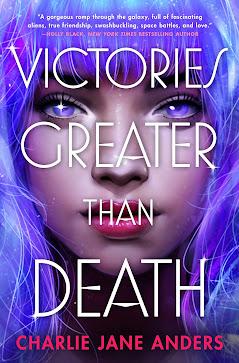
Victories Greater Than Death (Unstoppable #1) by Charlie Jane Anders (Tor Teen, 2021)
Review by Lis Carey: Tina Mains knows she doesn’t have to worry about being ordinary. She’s known since she was quite young that she’s the clone of an alien war hero, hidden, disguised, on Earth, and when the time comes, the beacon implanted in her body will activate, and her life will change. In the meantime, she just has to survive high school.
When it happens, though, suddenly she’s being hunted by the enemies of the woman she was cloned from before the starship that will take her to her destiny even arrives. When it does, barely in the nick of time, she and her best friend, Rachel, are injured, and need the resources of the ship’s sick bay before anything else.
But the ship is more battered, worn, and short of crew than it is a shiny, powerful battle cruiser, and it turns out that the Royal Fleet has been counting on the return of their late hero more than she had imagined possible. Tina, Rachel, and four more teenagers they recruit using video games, soon find they will need to learn fast, and start coming up with their own ideas, if they’re going to face anything other than the defeat and destruction of the ship they’re on.
The six Earthlings are getting acquainted with several alien species, life on a military ship, the politics and ethical system of the Empire. And that Empire has perhaps grown more rigid and inflexible since the death of the woman Tina was cloned from, due to almost two more decades of relentless and unsuccessful war against a breakaway political force that’s frankly genocidal. These people need some loosening up, fresh ideas, and reminders of what they used to stand for.
Tina and her friends first have to figure out how to survive and thrive in this strange new environment, before they can save the rest of the galaxy.
This is a teen adventure in space, with really interesting characters, whether human, alien, or in Tina’s case, a bit of both. They face dangerous challenges, painful losses, and the need to make real decisions about who they are, and who they want to be.
Enjoyable and satisfying.
I received this book as part of the 2022 Hugo Packet, and am reviewing it voluntarily.
The prize was created to celebrate “excellence, originality, and the very best in crime fiction from UK and Irish authors” whose novels were published in paperback during the eligibility period.
The winner receives £3,000 and a handmade, engraved beer barrel provided by Theakston Old Peculier.
The public are now invited to vote for a shortlist of six titles here; voting for that closes May 16. Then the shortlist will be posted and winner voting will open June 13. The prize winner will be revealed July 18.
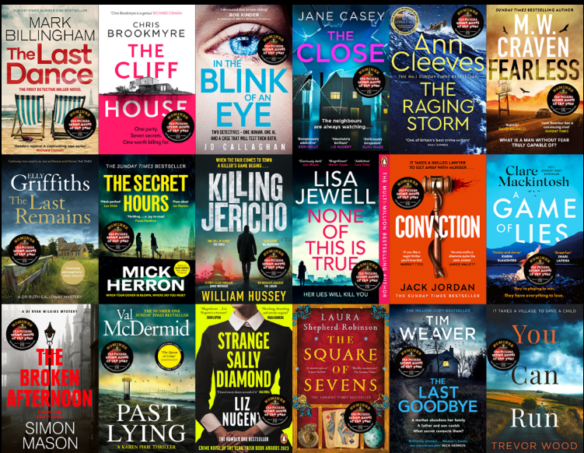
The Longlist in full:
The Last Dance by Mark Billingham(Sphere; Little, Brown Book Group)
The Cliff House by Chris Brookmyre(Abacus; Little, Brown Book Group)
In the Blink of an Eye by Jo Callaghan (Simon & Schuster UK)
The Close by Jane Casey (Harper Fiction; Harper Collins)
The Raging Storm by Ann Cleeves (Pan Macmillan)
Fearless by M W Craven (Constable; Little, Brown Book Group)
The Last Remains by Elly Griffiths (Quercus)
The Secret Hours by Mick Herron (Baskerville; John Murray Press)
Killing Jericho by William Hussey (Zaffre, Bonnier)
None of This is True by Lisa Jewell (Century; Cornerstone)
Conviction by Jack Jordan (Simon & Schuster)
A Game of Lies by Clare Mackintosh(Sphere; Little, Brown Book Group)
The Broken Afternoon by Simon Mason (riverrun; Quercus)
Past Lying by Val McDermid (Sphere; Little, Brown Book Group)
Strange Sally Diamond by Liz Nugent (Sandycove; Penguin Ireland)
The Square of Sevens by Laura Shepherd-Robinson(Pan Macmillan)
The Last Goodbye by Tim Weaver (Michael Joseph; Penguin Random House)
(1) THE EDITOR’S LIFE. Penmen Review has a two-part transcript of a panel about “The Role of the Editor in Publishing” with editors Ellen Datlow and Joe Monti, and copyeditor Deanna Hoak.
Ellen Datlow: Well, I mean, short fiction is very different in getting into. It’s always been difficult, and I think it still is, but there are so many people starting new magazines. It’s hard to make a living out of writing short fiction and editing. There aren’t that many magazines that pay their editors or publishers, like F&SF, the four Dell Magazines: Ellery Queen, Alfred Hitchcock, Analog, and Asimov’s. Most of the others are started by people who are scrambling to make a living out of it, like Neil Clarke and the Thomases. It’s very hard. And the way to get into anything is to read slush, whether it’s novels or short stories, if you can get a job or an internship. You often don’t get paid to do that, but it’s experience, and you make connections and contact anyone you ever heard of.
One thing I learned very early is that if someone—a book editor or a major editor or publisher or anybody else—says “There’s no job, but I can talk if you’d like to come in,” always say yes. If anyone professional offers to have a drink with you, coffee with you, just talk with you in their office, say yes, because they may know some other job available, and they’ll give you insight into the whole publishing industry. It goes back to the connections and networking aspect of the whole thing. You have to put yourself out there.
W4W: We’re going to try to pull some questions out of the chat. How fast do you need to be able to edit? …
Deanna Hoak: I’m paid by the hour, but you’re expected to do more and more within that hour. When I first started out in copy editing, the standard was that you were expected to edit about 2,500 words per hour, say ten manuscript pages an hour. But now companies are expecting more and more. I know there is one publisher that wants 17 pages an hour done.
As a copy editor, I read every manuscript at least twice, and I read sections of it more than that, because if I don’t read it at least twice, I will miss some of the plot holes. Plus, you’re fact checking. You’re going back and forth. You’re doing a lot of stuff. Seventeen pages an hour – it just doesn’t work for me. I end up not taking very many projects for the companies that want me to do that.
Joe Monti: I keep it all in my head as I go along. It’s terrible. So I’m a slow reader, but it’s because I read and ingest it and keep it all going in my head at the same time. I may make little comments on the side throughout the manuscript. But yeah, I keep it all in my head, and then keep going. And then there’s a flow that happens. It’s very much a bell curve. Maybe 15, 20 pages the first hour. And then by like hour two or three, I’m going to 40, 60 pages an hour.
But it depends on the book. And sometimes I have little to no editing. I have done almost no editing on Ken Liu‘s quartet of fantasy novels. And if you’re not familiar, the last two were 367,000 words, so it was split in two. That one we cut the ends off and beginnings. But other than that, I didn’t edit almost anything in it. Yet it took me two months because I was reading it and making sure it all fit. And everything fit perfectly. But Ken’s a rare genius, and he’s worked meticulously on his craft. One of the reasons why we work well together is that I know he knows that I trust him, and I get him. This is a lot of the creative part of it–I get your voice.
… How many books are sold in the United States? The only tracker we have is BookScan, which logs point of sale—i.e., customer purchases at stores, websites, etc.—for most of the market. BookScan counted 767 million print sales in 2023. BookScan claims to cover 85% of print sales, although many in publishing think it’s much less. It does not capture all store sales, any library sales, most festival and reading sales, etc. (Almost every author will tell you their royalty reports show significantly more sales than BookScan captures. Sometimes by orders of magnitude.)
Still, I’ll be very conservative and assume 85% is correct. This means around 900 million print books sold to customers each year. Add in ebooks and the quickly growing audiobook market, and the total number of books sold over 1 billion. Again, this is the conservative estimate….
…I write Sherlock Holmes stories for the same reason I read them, to divert my attention from the terrifying issues that plague the rest of my waking hours—Ukraine, Gaza, drought, famine, wildfires, limits on voting rights, Fox News and anti-vaxxers.
But for a few hours, when I read or write Sherlock Holmes stories, I am transported to what appears to be a simpler world, where a creature of superhuman intelligence, nobility, compassion and yes, frailty, can make sense of it all. Was the Victorian world in fact simpler than this one? We’ve no way of knowing, but like an audience willing itself to believe that the magic trick is really magic, we are conniving accomplices to our own beguilement….
… Directed by Academy Award winner Ron Howard, Jim Henson Idea Man chronicles the story of extraordinary artist and visionary Jim Henson. In his 36-year career, Henson created some of the world’s most cherished characters, including classic Muppets like Kermit the Frog and Miss Piggy and all of Sesame Street’s iconic residents, including Big Bird, Grover, Cookie Monster and Bert and Ernie. Henson also directed beloved fantasy films like The DarkCrystal and Labyrinth….
…Fetter, the central character of The Saint of Bright Doors is more keenly aware of the dislocation of both time and geography than most. He has some of the qualities of a Peter Pan, unattached from his shadow and with a loose relationship with gravity. Raised in a remote rural village by his mother to be an assassin, he has turned his back on that destiny and instead lives in the modern world of email, crowd-funding, run-down apartments and light-rail transit.
Fetter lives in the present or rather he doesn’t live there at all. Science fiction and fantasy have their fair share of unreliable narrators but Fetter lives in a world of unreliable world-building….
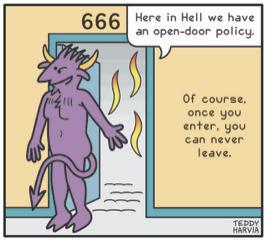
(6) TEDDY HARVIA CARTOON.
(7) FATHOM LORD OF THE RINGS EVENT. Via Robin Anne Reid we learn that Fathom Events will reprise The Lord of the Rings Trilogy on June 8, 9 and 10 in certain U.S. theaters. Tickets available at the link.
Warner Bros. and Fathom Events are teaming up to release Jackson’s magnum opus in extended versions, including those Jackson remastered for the 4K Ultra HD rerelease that came out in 2020. This will be the first chance for fans to see the purest iteration of Jackson’s vision on the big screen, however.
(8) TODAY’S BIRTHDAY.
[Written by Cat Eldridge.]
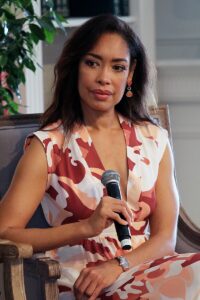
Born April 25, 1969 — Gina Torres, 55. Where shall I start with Gina Torres? What was her best role? I submit it was a non-genre role as Jessica Pearson in the legal drama Suits and Pearson, the sort of sequel series where she was a disbarred attorney. It was a truly meaningful role that she got to grow into over the time the two series ran.
Gina Torres in 2018.
Genre-wise her most interesting character was Zoë Alleyne Washburne in the Firefly series which I really would have loved to see developed into more a rounded character had the series lasted. I liked her background of having served in the Unification War under Reynolds for two-and-a-half years and being one of the few to survive the Battle of Serenity Valley.
Before that she was down in New Zealand, where she appeared in Xena: Warrior Princess as Cleopatra in “The King of Assassins” , and in Hercules: The Legendary Journeys, she had a recurring role as Nebula.
She was in the M.A.N.T.I.S. series as Dr. Amy. I liked that series.
She was the Big Bad in a season of Angel as Jasmine. It’s hard to explain what she did here without Major Spoilers being given away and there might be at least one least one reader here who hasn’t seen Angel yet. I actually think it’s a better series than Buffy was.
Right after the Firefly series, she has a role in the Matrix films, The Matrix Reloaded and The Matrix Revolutions as Cas.
After that came the Cleopatra series where she was Helen “Hel” Carter (and which last longer than I thought at twenty-six episodes) , a great piece of pulpy SF. She was obviously having a lot of fun there.
One of my favorite roles for her strictly using her voice came in the animated Justice League: Crisis on Two Earths where she was the Crime Syndicate Siberia Woman. Stellar role done with just her voice. She also voiced Vixen / McCabe on Justice League Unlimited. She was the girlfriend of John Stewart, the Green Lantern there.
She voiced Ketsu Onyo on two of the animated Star Wars series, Star Wars Rebels and Star Wars Forces of Destiny. She’s a Mandalorian bounty hunter who helps the Rebel Alliance.
She’s on Westworld in a storyline that that is so convoluted that I’m not sure that I could explain it. Suffice it to say that she was there. Or not.
Lest I forget I should note that she had a recurring role on Alias as Anna Espinosa, an assassin who was the utterly ruthless and ceaselessly persistent nemesis of Sydney Bristow, the character that Jennifer Garner played.
(10) OCTOTHORPE. In episode 108 of the Octothorpe podcast, “Ramp is Not Ramp”, John Coxon, Alison Scott and Liz Batty look back at Eastercon.
We bask in the post-Levitation haze, going into some detail on accessibility, venue, programme, virtual, social and other aspects of the most recent Eastercon. We also mix in a variety of witty and insightful commentary, probably.
Westworld ran for four seasons on HBO, but was canceled shortly after its last season wrapped and was later booted from the streaming platform. Season 4 ended on a more or less satisfactory note, but both Nolan and Joy have expressed interest in finishing the story they started.
According to the creators, Westworld still needs one more season to wrap up the battle of wills between humans and hosts. In an interview with The Hollywood Reporter, however, Nolan suggested the story could continue in a different medium, like a graphic novel or even a movie. Either way, television production seems to be moving on for good, as Westworld’s costumes, props, and set pieces are about to be scattered to the winds.
Heritage Auctions is hosting a massive Westworld auction. The event features more than 230 pieces from the series…
… Amazon’s Audible and Pottermore Publishing, the global digital publisher of Rowling’s Wizarding World, will co-produce a brand-new audiobook series for the original seven Harry Potter stories. The new audiobooks are scheduled to premiere in late 2025, with each of the seven English-language titles to be released sequentially for a global audience, exclusively on Audible.
The companies said the full-cast audio productions — with more than 100 actors — will “bring these iconic stories to life as never heard before.”…
… Oreo and Sour Patch Kids have teamed up to create the first-ever sour Oreo cookie. No, the Sour Patch Kids aren’t playing a trick on you—this collab is very real.
The limited-edition Sour Patch Kids Oreos look like your classic Golden Oreo, but look again; Those mischievous gummy candies are actually in the cookie and creme. The Oreo cookie itself is Sour Patch Kids-flavored and dotted with colorful mix-ins. The sandwich creme is the classic Oreo creme filled with sour sugar pieces. Looks like this Oreo will also be sour, sweet, then gone….
Drivers will buy 17 million electric vehicles this year, according to the International Energy Agency. That means one in five cars sold worldwide will be EVs.
That’s a lot of cars, and they need a lot of places to charge. Detroit is testing a new way to charge EVs that doesn’t require plugging cars in — just drive on the right strip of road and watch the battery fill up.
Here & Now’s Peter O’Dowd spoke with Bloomberg NEF analyst Ryan Fisher and Justine Johnson, chief mobility officer with the state of Michigan’s Office of Future Mobility and Electrification about the future of charging systems and EV sales….
“A vehicle will be connected to a smart road. Essentially the road has a wireless inductive charging coil inside of it and the vehicle is communicating with the actual coils underneath the road to receive their charge. So while a vehicle is driving, as long as it has the receiver underneath the vehicle, you charge and you drive at the same time maintaining your charge but also adding some charge range to that as well.”…
An observatory at the South Pole has made the first solid detection of a type of elementary particle called the tau neutrino that came from outer space.
Neutrinos of all three known ‘flavours’ are notoriously elusive, but among them, the tau neutrino is the most elusive yet: it was first directly detected in the laboratory only in 2000.
At the IceCube Neutrino Observatory, detectors embedded throughout a cubic kilometre of the Antarctic ice sheet pick up flashes of light that signal the possible presence of a neutrino. When a tau neutrino hits the ice, it produces a particle called a tau lepton, which travels only a short way before decaying. The resulting signal is similar to that produced by an electron neutrino, whereas muon neutrinos produce muons, which leave long traces in the ice.
The IceCube Collaboration looked at IceCube data from 2011 to 2020, and used machine learning to distinguish between the signals of tau, electron and muon neutrinos. The collaborators found seven interactions that had a high probability of being produced by high-energy tau neutrinos.
[Thanks to Teddy Harvia, Kathy Sullivan, Mike Kennedy, Andrew Porter, John King Tarpinian, Chris Barkley, Cat Eldridge, SF Concatenation’s Jonathan Cowie, and Steven French for some of these stories. Title credit belongs to File 770 contributing editor of the day Patrick Morris Miller.]
Best General Literary Work Story collections, comic collections, graphic novels, non-fiction works, and serialized online stories.
• Gnoll Tales, by NightEyes DaySpring. (Dancing Jackal Books – short story collection – June)
Best Non-Fiction Work
• Furscience, by Dr. Courtney N. Plante. (International Anthropomorphic Research Project – research on furry fandom – December)
Best Graphic Story Includes comic books, and serialized online stories.
• Tamberlane, by Caytlin Vilbrandt and Ari Noble. (Internet – January 11 to December 27)
Best Comic Strip Newspaper-style strips, including those with ongoing arcs.
• Foxes in Love, by Toivo Kaartinen. (Twitter – Jan 1 to December 21)
Best Magazine Edited collections of creative and/or informational works by various people, professional or amateur, published in print or online in written, pictorial or audio-visual form.
• Dogpatch Press, edited by Patch O’Furr. (Internet – February to December)
Best Visual Art Illustrations for books, magazines, convention program books, cover art for such, coffee-table portfolios.
Best Game Computer or console games, role-playing games, board games.
• Laika: Aged Through Blood (Developer:Brainwash Gang – Publisher:Thunderful Publishing – October 19)
Best Website Online collections of art, stories, and other creative and/or informational works. Includes galleries, story archives, directories, blogs, and personal sites.
Minnesota Book Award finalist Andrew DeYoung (2023) moderated a discussion between all four 2024 finalists in contention for the Minnesota Book Award for Genre Fiction: C.M. Alongi, author of Citadel (Blackstone Publishing); Tashia Hart, author of Native Love Jams (self-published); Naomi Kritzer, author of Liberty’s Daughter (Fairwood Press); Emma Törzs, author of Ink Blood Sister Scribe (William Morrow/HarperCollins Publishers). The Minnesota Book Awards are sponsored by Education Minnesota; Macalester College is the 2024 category sponsor for the Genre Fiction category.
…This relatability is part of what has made The Murderbot Diaries so beloved. Golden Voice Kevin R. Free, who has narrated all of the unabridged audiobooks in the series, says that fans regularly reach out to him to tell him that they’ve listened over and over again. “When people say, ‘It’s comforting to me when I listen to this,’ I just feel so happy that I’m bringing people comfort.” Free stresses that he’s also a fan of the books, and he’s quick to give full credit to Wells….
(3) APPLY FOR SLF OLDER WRITERS GRANT. The Speculative Literature Foundation will accept applications for the 2024 Older Writers Grant from May1 through May 31. The complete guidelines are here.
Since 2004, the $1,000 Older Writers Grant has been awarded annually to writers who are at least fifty years of age at the time of application to assist such writers who are just starting to work at a professional level. These funds may be used as each writer determines will best assist their work. This grant, as with all SLF grants, is intended to help writers working with speculative literature.
Grant applications are open to all: you do not need to be a member of SLF to apply for or receive a grant. Launched in January 2004 to promote literary quality in speculative fiction, the Speculative Literature Foundation addresses historical inequities in access to literary opportunities for marginalized writers. Our staff and board are committed to representing racial, gender, and class diversity at all levels of our organization. This commitment is at the heart of what the Speculative Literature Foundation stands for: equal access to create and advance science fiction, fantasy, and horror literature. We strive to enable writers at any stage of their career and of any age, any ethnicity, any gender expression, from any location and of any economic or social status, who want to learn about, or create within, the speculative arts. The SLF is a 501(c)3 non-profit.
(4) NEW VOLUME IN THE TAFF LIBRARY. Sue Mason’s Into the Wide Purple Yonder: A Fan Artist in America, a report of her westbound TAFF trip to the USA and the 2000 Chicago Worldcon (Chicon 2000), was published in 2023 by Alison Scott, illustrated with many photographs and artwork by Sue herself. David Langford says it now has been “Added to the TAFF site with the kind permission of Sue and Alison on 24 April 2024.” Cover artwork by Sue Mason.
Science fiction has been warning us about fascism for decades — so why haven’t we listened? How did Nazis become just another monster in our stories, like werewolves or cyborgs? Plus we talk about the new wave of book censorship with Maggie Tokuda-Hall, co-founder of the new organization Authors Against Book Bans.
First Appearance: Thor (Vol. 1) #346, by writer/penciler Walt Simonson, inker Terry Austin, colorist Christie Scheele, and letterer John Workman Jr.
Created by the frost giants, this ancient weapon has limitless power stored within it. The Casket of Ancient Winters can unleash a devastating icy wind that can consume entire worlds. It often gets forgotten because it has been stored in Odin‘s treasure room safely for years.
The Casket of Ancient Winters briefly appeared in the MCU. Loki used it to help the frost giants take over Asgard. His plan was unsuccessful, and the artifact remained locked in Odin’s vault, but it is an endlessly powerful tool that has been seemingly forgotten by Marvel fans.
…Geisler was known for her snark and humor, from her cherished pocket constitution to her in-class commentary. In her beloved 1980s Mazda GLC, Geisler was a vibrant presence on campus, one that worked to push her students just as much as she worked to foster their passion for journalism.
Edwards, who had a class with Geisler in the spring of 2020 at the start of the coronavirus in 2020, said her spirit was pivotal to maintaining community and morale throughout Zoom classes.
“Through the transition to virtual learning, Deb made it so all about the students. She put her students before herself, she again always found time to make us laugh. She was very, very flexible. She really was just great,” said Edwards.
Geisler was heavily involved in the Suffolk and Boston communities. At Suffolk, she was the adviser to The Suffolk Voice. Her passion for all things science fiction led her to chair Noreascon 4, the 2004 World Science Fiction Convention, along with her involvement in conventions through the years….
(8) TODAY’S BIRTHDAY.
[Written by Cat Eldridge.]
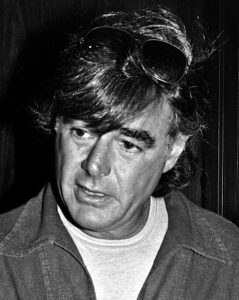
Born April 24, 1930 — Richard Donner. (Died 2021.) Tonight we have Richard Donner who has entered the Twilight Zone, errr, the Birthday spotlight. As a genre producer, he’s responsible for some of our most recognizable productions.
His first such works was on The Twilight Zone (hence my joke above in case you didn’t get it) as he produced six episodes there including “Nightmare at 20,000 Feet”. He’d go on to work in The Sixties on The Man from U.N.C.L.E., Get Smart!, and The Wild Wild West. He closed out this period by producing Danger Island (which I’ve never heard of) where, and I quote IMDB, “Archaeologists are being pursued by pirates around an island in the South Pacific. On this island, various adventures await them.” It’s at least genre adjacent, isn’t it?
Richard Donner in 1979. Photo by Alan Light.
So forty-eight years ago and then two years later, he directs not one but two now considered classic films in two very different genres. First out was The Omen with an impressive cast far too long to list here that got mixed reviews but had an audience that loved and which birthed (that’s deliberate) a franchise and garnered two Oscar’s nominations.
Next out was, oh guess, go ahead guess, Superman. Yes, it would win a much-deserved Hugo at Seacon ’79. DC being DC the film had a very, very difficult time coming to be and that was true of who directed the film with several sources noting that Donner may have been much as the fourth or fifth choice to do so. Or more.
So what did he do post-Superman? Well something happened during the production of Superman II and he was replaced as director by Richard Lester during principal photography was Lester receiving sole directorial credit. That being most likely tensions, and that was the polite word, which he had with all of the producers concerning the escalating production budget and production schedule. Mind you both films were being shot simultaneously.
If you’re so inclined, Superman II: The Richard Donner Cut was released oddly enough when the film came out so I’m assume he had the legal right to do so which I find damn odd.
He did go on to direct The Goonies. Now I really don’t think it’s genre, but I will say that the treasure map and the premise of treasure make it a strong candidate for genre adjacent, wouldn’t you say? Truly a great film!
He went on to direct one of my favorite Bill Murray films, Scrooged. The Suck Fairy says she still likes that film and will agree to watch it every Christmas as long as there’s lots of hot chocolate to drink
His last work was a genre one, Timeline, about a group of archaeologists who travel back to fourteenth century France, based on a Michael Crichton thriller.
(10) SUN-RELATED SFF ON LEARNEDLEAGUE. [Item by David Goldfarb.] There was a One-Day Special quiz about the Sun recently. Most of it isn’t relevant to our interests, but there were two questions involving SFF:
4. In the Marvel Universe, Brazilian mutant Roberto da Costa draws powers from the Sun that include super strength, flight, and the ability to generate blasts of energy. What superhero name does da Costa use as a member of both the X-Men and the New Mutants?
Only 17% of players knew this was “Sunspot”.
7. The 1953 science fiction story “The Golden Apples of the Sun” follows a spaceship tasked with approaching the Sun and trying to literally capture a sample of its material within a giant metal cup operated by a robot hand. The title of the story was taken from a line in the 1899 poem “The Song of Wandering Aengus.” Name either the author of the sci-fi story (who is American) or the writer of the namesake poem (who is Irish).
45% of players got this one. The poet was William Butler Yeats; I won’t insult Filers by giving the name of the SF author.
In the original version of the popular board game Settlers of Catan, players start on an undeveloped island and are encouraged to “fulfill your manifest destiny.” To win you have to collect resources and develop, claiming land by building settlements, cities, and roads.
A new version of the board game, Catan: New Energies, introduces a 21st-century twist — pollution. Expand responsibly or lose. In the new version, modern Catan needs energy. To get that energy players have to build power plants, and those plants can run on renewable energy or fossil fuels. Power plants operated on fossil fuels allow you to build faster but also create more pollution. Too much pollution causes catastrophes….
…This week, 38North published an article revealing that a North Korean animation studio was believed to have worked on the upcoming anime Dahlia in Bloom. This is despite sanctions currently being observed forbidding businesses from working with state-owned North Korean companies. An analysis of leaked files shows that the North Korean studio was likely April 26 Animation Studio, also known as SEK Studio. 38North adds that the studio is North Korea’s leading animation studio, producing many series for domestic TV.
Analysis of the files has also revealed that instructions in Chinese were provided to the North Korean studio, with 38North adding that a Chinese company likely acted as an intermediary between the North Korean studio, Dahlia in Bloom‘s animation studio and others. Other animated series the studio is believed to have worked on are HBO’s Iyanu, Child of Wonder and Invincible Season 3. Files have also been identified that may suggest a relationship with the Japanese animation studio Ekachi Epilka (Demon Lord, Retry!).
Despite its many risks, outsourcing in the Japanese anime industry is often done due to significantly lower labor costs.…
Shane White is an artist, and a mighty good one. I've hired him to ink stuff before (see illo), and now he's posted an entire video about inking. It is very educational. The next time I see him, I will ask for his autograph. (https://t.co/weIx1hhKBl) pic.twitter.com/Lhx7iQC6Gx
[Thanks to Steven French, Teddy Harvia, Kathy Sullivan, Michael J. Walsh, David Goldfarb, Daniel Dern, Mike Kennedy, Andrew Porter, John King Tarpinian, Chris Barkley, Cat Eldridge, and SF Concatenation’s Jonathan Cowie for some of these stories. Title credit belongs to File 770 contributing editor of the day OGH.]