(1) HERSTORY. James Davis Nicoll, in “Fighting Erasure: Women SF Writers of the 1970s, Part III”, continues his series for Tor.com.
…Clarion graduate P. C. Hodgell has been active since the late 1970s. She is the author of the long-running Chronicles of the Kencyrath (nine volumes since 1982). Readers of a certain vintage may have vivid memories of the twelve-year desert between the third book in the series, Seeker’s Mask, and the fourth, To Ride a Rathorn. Currently she has the active support of a publisher whose name escapes me. Since the series is continuity-heavy, you will want to start with the first volume, 1982’s God Stalk, in which an amnesiac woman of a race of staunch monotheists finds herself in a city of a thousand gods—none of whom seem to be particularly helpful gods…
(2) CROWDFUNDING AMAZING: AN UPDATE. The Amazing Stories Kickstarter has accumulated $7,811 of its $30,000 goal, with 23 days remaining. Steve Davidson has begun revealing the authors who will be in the first print issue:
We are pleased to announce the following writers have contributed stories; Kameron Hurley, Paul Levinson, Dave Creek, Shirley Meier, Drew Hayden Taylor, and Allen Steele.
While we’re excited about all our authors, let us tell you a little bit about Kameron Hurley and her story…
(3) ANALOG BLOG. From a Featured Futures’ links post I learned about The Astounding/Analog Companion, “the Official Analog Science Fiction and Fact blog.” Last month they published Gregory Benford’s background notes about a piece he wrote for the magazine: “Thinking About Physics a Century Hence”.
I’ve published over 200 short stories and over 200 scientific papers, reflecting a symmetry of sorts.
My career as a professor of physics at UC Irvine has taken most of my working life, with writing as a hobby that has surprised me by success. So I see SF through a scientific lens, focused on plausible futures. But sometimes I just wing it, and speculating on physics a century hence is a grand leap, indeed.
The mock future news report in the current Analog issue [“Physics Tomorrow: A News Item of the Year 2116,” March/April 2018 Analog, on sale now] came from a contest the journal Physics Today ran in 2016: to devise an entry for that journal in a century. I took the challenge, and produced this “story” because the physics intrigued me.
Physics Today did not select my essay, from 230 others. They published much more pedestrian stuff. Since then, I’ve worked with an old friend and general relativity physicist Al Jackson, to calculate in detail how to in fact make a “gravwave transmitter.”
Then I thought, why not try Analog? As a physicist and SF writer, both avenues are natural. Indeed, maybe writing future news items is a new way to think of SF….
(4) ASIMOV’S TOO. There’s also an Asimov’s Science Fiction Magazine Author & Editor Blog called From the Earth to the Stars. They recently conducted a “Q&A with Mary Robinette Kowal” about her Asimov’s story “Artisanal Trucking, LLC.”
Asimov’s Editors: What is the story behind this piece?
Mary Robinette Kowal: I was at a conference in a round table discussion talking about automation and privilege. At some point, we were talking about how knitting, which used to be a necessary thing, became automated with knitting machines and now it is a luxury art. It’s expensive to buy wool. It takes time and leisure to make a garment. I said, “I imagine the hipsters of the future will totally do artisanal trucking.” I had more of a point but stopped talking as Story stampeded through my brain.
(5) USING SOCIAL MEDIA. Dawn Witzke begins a series of posts with “On Professionalism: Part 1” at Superversive SF. No writer can go wrong following this piece of advice:
Social Media
Writers must be on social media, which means that everything, personal and professional is up for examination. How you present yourself online can affect what impression other authors, editors and publishers make of you.
Stick to arguing ideas, not making personal attacks. Most likely this will not be reciprocated. That’s okay. Let them look like the jerk.
Trolling is a whole other ball game. While it’s not seen as professional, some writers use it as a marketing tool (Milo Yiannopolus), which is all well and good if you publish in hotly debated subjects like politics. But in general, it creates as many enemies online as friends. Use with caution.
(6) HAWKING ON THE AIR. Watch Mojo has assembled the “Top 10 Unforgettable Stephen Hawking Cameos in Pop Culture.”
Renowned scientist Stephen Hawking passed away March 14, 2018. But before Stephen Hawking died, he not only made some incredible scientific breakthroughs; there are also many hilarious Stephen Hawking cameos to remember him by. Whether he was supporting Monty Python, speaking to John Oliver or playing poker on “Star Trek: The Next Generation,” Stephen Hawking was a fabulous ambassador for science.
- #10: “Monty Python Live (Mostly)” (2014)
- #9: “Late Night with Conan O’Brien” (1993-2009)
- #8: Pink Floyd’s “Keep Talking” (1994) & “Talkin’ Hawkin’” (2014)
- #7: “Stephen Hawking’s New Voice” (2017)
- #6: “Anyone Can Quantum” (2016)
- #5: “Last Week Tonight with John Oliver” (2014-)
- #4: “Futurama” (1999-2013)
- #3, #2 & #1???
(7) A BBC/HAWKING ROUNDUP.
- “The science that made him famous”: Just in case anybody needs a review; has his misses as well as his hits.
- “Scientist’s most memorable quotes”:
The downside of my celebrity is that I can’t go anywhere in the world without being recognized. It is not enough for me to wear dark sunglasses and a wig. The wheelchair gives me away.
As the world mourns Prof Stephen Hawking, who has died aged 76, there has been a particular outpouring of emotion in China, where the visionary physicist was revered by scientists, students, the state and even boy band stars.
- “The book that made him a star”, by the Cambridge U Press director who suggested it:
In 1982, I had responsibility for his third academic book for the Press, Superspace And Supergravity.
This was a messy collection of papers from a technical workshop on how to devise a new theory of gravity.
While that book was in production, I suggested he try something easier: a popular book about the nature of the Universe, suitable for the general market.
Stephen mulled over my suggestion.
(8) FLEISHER OBIT. Michael Fleisher (1942-2018): US comics writer and novelist; died February 2, aged 75. Titles he worked on include The Spectre, Jonah Hex, Shade the Changing Man (created and drawn by Steve Ditko). Famously sued The Comics Journal, publisher Gary Groth and Harlan Ellison over a 1979 interview in which the latter described Fleisher (tongue in cheek, Ellison later claimed) as a “certifiable (..) bugfuck (..) lunatic”; the court found for the defendants. [By Steve Green.]
(9) TODAY IN HISTORY
- March 14, 1994 — Robocop: The Series premiered on television.
(10) TODAY’S BIRTHDAY RELATIVIST
- Born March 14, 1879 – Albert Einstein
(11) COMICS SECTION.
- John King Tarpinian isn’t the only one who remembered this is Pi Day – The Argyle Sweater.
- Off the Mark also has a subtle play on the day.
- As a commenter says after reading today’s Lio, “Before buying a book, always check to see if the title is a typo or not.”
(12) THANKS AND PRANKS. CBR.com answers its own question about the Harlan Ellison references in Hulk comics of the Seventies: “Comic Legends: Did A Hulk Classic Pay Hidden Tribute to a Sci-Fi Great?”
Anyhow, amusingly enough, Thomas was so pumped about having Ellison work on these issues that he actually decided to go a step further and, since the issue came out on April 1st, he would do an April Fool’s prank of sorts by working the name of over 20 Ellison stories into the story!
I won’t list all of them here, but I’ll do a few (the great poster, ruckus24, has all of them here).
Most notably is the title of the story, which is an adaptation of one of Ellison’s most famous story collections…
(13) MAD, YOU SAY. At Galactic Journey, Rosemary Benton reviews the newly released (55 years ago) Vincent Price film Diary of a Madman: “[March 14, 1963] Rising Stars and Unseen Enemies (Reginald Le Borg’s Diary of a Madman)”.
It feels as though, no sooner had the curtain fell and the lights came up on February’s horror/fantasy gem, The Raven, that the film reel snapped to life with another genre-crossing macabre film. While last month’s movie was a light, dry and sardonic comedy with a vaguely medieval setting and a cast of horror movie icons, Diary of a Madman, steps forward with a much more sobering aesthetic.
(14) SEMIPRO AND FAN CATEGORIES. Abigail Nussbaum continues a discussion of her Hugo nominating ballot in “The 2018 Hugo Awards: My Hugo Ballot, Publishing and Fan Categories”. Here’s Nussbaum’s picks to succeed her in a category she won last year.
Best Fan Writer:
(A brief reminder here that I have announced that I would decline a nomination in this category if I received enough votes to qualify this year.)
- Nina Allan – Nina had a great 2017, with her second novel The Rift gaining wide acclaim and attention. She also continued to do good work as a critic and reviewer, on her personal blog, at Strange Horizons, and in the Shadow Clarke project.
- Vajra Chandrasekera – We didn’t see as much of Vajra’s nonfiction writing in 2017 as I would have liked–his focus these days seems to be on his own fiction and on being a fiction editor at Strange Horizons. But his writing at the Shadow Clarke site was some of the most insightful writing that project offered up, in particular this review of Aliya Whitely’s The Arrival of Missives.
- Erin Horáková – After nominating Erin’s magnum opus for Best Related Work, you’re probably not surprised to find me nominating her in this category. As well as that magnificent essay, Erin did other writing for Strange Horizons in 2017, covering movies, plays, and board games.
- Samira Nadkarni – A lot of Samira’s best work is happening on twitter, where in 2017 she made some incisive comments about works like Star Trek: Discovery or Thor: Ragnarok (she had some equally interesting things to say last month about Black Panther). In longer writing, some standouts include her review of Deserts of Fire, an anthology about “modern war” whose project Samira argues with vociferously, and of the Netflix show Crazyhead, in which she discusses the genre trope of conflating mental health problems and superpowers.
(15) NEWS TO ME. Those who wish to enhance their terminological education can start the thread here –
https://twitter.com/sqiouyilu/status/974097656757682179
Just remember – once you know, there’s no going back!
(16) INFOGALATIC. Did you forget about Vox Day’s intended Wikipedia replacement, Infogalactic? Camestros Felapton hasn’t. He gives a status report in “Revisiting Voxopedia”.
Actor Robert Guillaume is alive and well on Voxopedia despite dying in October 2017 in Wikipedia: https://infogalactic.com/info/Robert_Guillaume as is (for all you Swap Shop fans out there) Keith Chegwin https://infogalactic.com/info/Keith_Chegwin who on Wikipedia died in Decemeber 2017. More famous people are more likely to have their deaths recorded but it is hit and miss.
The majority of pages remain as out-of-date Wikipedia pages from 2016 and the basic issue with Voxopedia remains the same: not enough editors and the editors it does have are mainly working on fringe projects. These are supplemented by one-off vanity pages (e.g. https://infogalactic.com/info/Richard_Paolinelli )
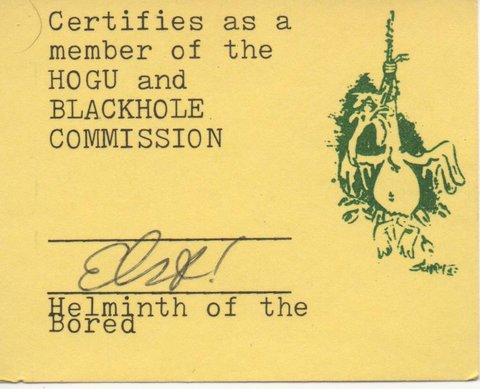
In comments, Camestros says Paolinelli wrote most of his own entry for Infogalactic. I’m fine with that. Never depend on others to make you famous, as Elst Weinstein and I concluded 40 years ago. (You probably wondered why there’s a copy of Weinstein & Glyer’s Discount Hoaxarama in every hotel room.)
(17) UP IN THE AIR. From the BBC: “Archaeopteryx flew like a pheasant, say scientists”. A synchrotron scan shows that the bones were hollow enough to allow short bursts of flight.
The famous winged dinosaur Archaeopteryx was capable of flying, according to a new study.
An international research team used powerful X-ray beams to peer inside its bones, showing they were almost hollow, as in modern birds.
The creature flew like a pheasant, using short bursts of active flight, say scientists.
Archaeopteryx has been a source of fascination since the first fossils were found in the 1860s.
(18) OFF THE SHELF. Our hero: “‘Boaty McBoatface’ sub survives ice mission”. The popular-choice name was passed on to autonomous submersible operating from the officially-named RSS David Attenborough. Boaty is just back from 48 hours exploring under an ice shelf.
The nation’s favourite yellow submarine swam under a near-600m thick ice shelf in the Antarctic, returning safely to its launch ship after 48 hours away.
It was an important test for the novel autonomous vehicle, which was developed at the UK’s National Oceanography Centre (NOC).
Boaty’s handlers now plan even more arduous expeditions for the sub in the years ahead.
This includes a traverse under the sea-ice that caps the Arctic Ocean.
(19) FANTASTIC DESTINATION. David Doering declares, “This Miyazki-inspired ad for Oregon travel is stupeyfyingly gorgeous!” — “Only Slightly Exaggerated | Travel Oregon”.
[Thanks to Martin Morse Wooster, Chip Hitchcock, John King Tarpinian, Steve Green, JJ, Cat Eldridge, Carl Slaughter, David Doering, and Andrew Porter for some of these stories. Title credit goes to File 770 contributing editor of the day Bill.]